

Last week, I was featured in one of my favorite newsletters, A Reading Life, where I gave an inside look at my reading life and the music that runs through it: how I make time to read, the books I always recommend, and tips for anyone looking to read more. A question in the comments has stuck with me about how I annotate and take notes, so I wanted to expand on it here.
I take notes to understand things, and that shows up in both my reading and my listening life.
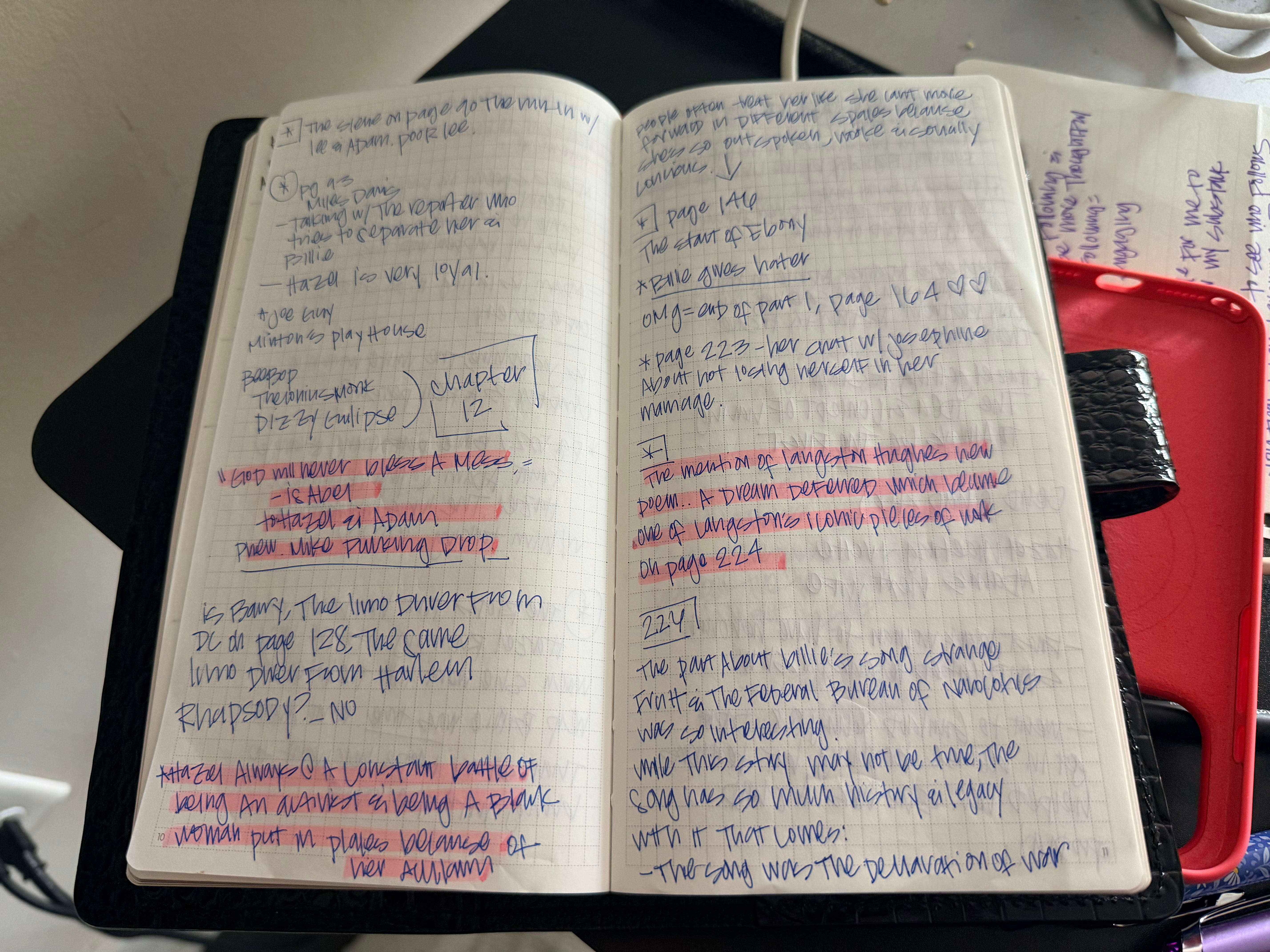
When I read, I take notes on themes, dialogue, settings, quotes, and lately, with historical fiction, things I want to learn more about. If you saw my notebook while I was reading With Love From Harlem by ReShonda Tate or Harlem Rhapsody by Victoria Christopher Murray, you’d think I was writing a term paper with all the notes, quotes, and questions I wrote down.
When I listen to new albums, or albums I haven’t listened to in a while, I take notes too. I write down what I like and don’t like, themes running throughout the album, lyrics that catch my ear, production notes and samples, and anything the song reminds me of. Recently, I filled two pages with notes on Rapsody’s new album, God Gotta Afro & Gold Hoops, and went down a rabbit hole on the production, themes, lyrics, and even her recent interviews, which helped me understand the songs and absorb the album more completely.
With books and music, the notes I take do different jobs.
With a book, I’m responding to it. With an album, I’m trying to understand it. And more often than not, one sends me looking for the other.
For instance, reading Leave Your Mess at Home by Tolani Akinola over the summer took me back to Lupe Fiasco’s debut album, Food & Liquor, which led me back to Lawrence Burney’s collection of essays, No Sense in Wishing (read my newsletter about both here).
Taking notes while reading Slanting Towards the Sea by Lidija Hilje sent me to a whole list of albums that made me feel the same things, like Corinne Bailey Rae’s self-titled debut, Olivia Dean’s The Art of Loving, and Lianne La Havas’ Is Your Love Big Enough? which also sent me back to the book and to an interview with Lidija.
What my process looks like
Growing up, my mom would make me do cute little book reports based on what I was reading. I loved this because it helped me understand what I was reading better and allowed me to write and share it with someone else. This was probably my entry point to annotating, and technically, to this newsletter you’re reading now.
With print books, I always read with a highlighter. At the end of each chapter or reading session, I jot down notes: either the full quotes I highlighted or the theme and a page number. I also write down anything else I find interesting, whether it’s a character map, timeline notes, or a random detail like a song or a meal mentioned in the book or something I thought of while reading.
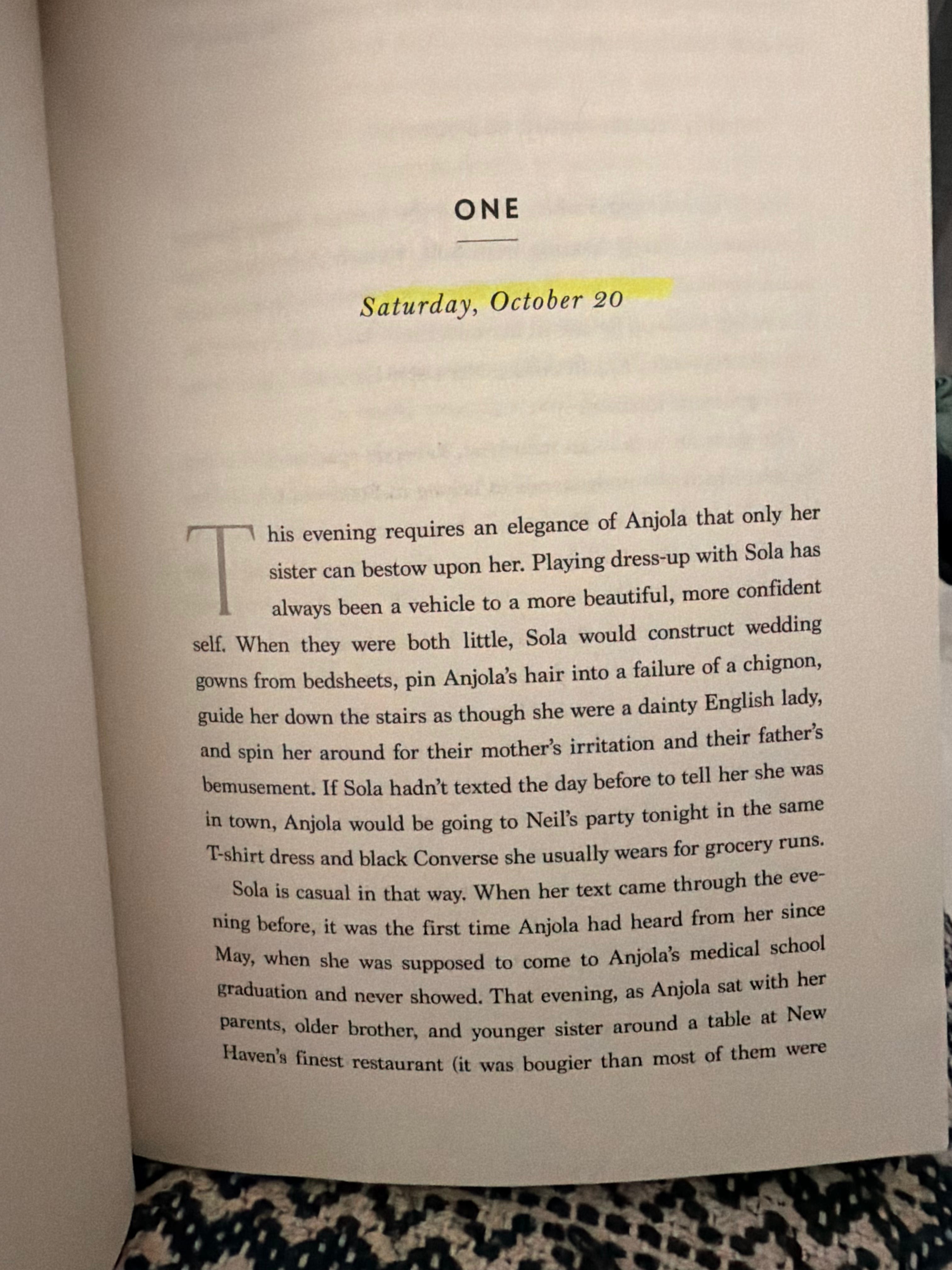


When I read Natalie Baszile’s upcoming novel, Friends and Family, a few weeks ago, I kept writing down street names. The book is set in the Bay Area, and it mentions so many places I know well: Lake Merritt, the Fillmore, Divisadero, and Pacific Heights. Being able to picture the setting helped me understand the characters and the story better.
When I take notes on albums, I always start on paper. I title a page with the album and start writing. With Rapsody’s album, there was so much to take note of: the metaphors, the bars, the stories, the production, and the collaborations. I wrote little notes like “phew” and “my girl is spitting,” because both notes are true. When I used to do music reviews for places like Okayplayer, this was my exact process for putting together album reviews.
I have been doing some version of these things for decades now, and I am confident that you can learn a lot about yourself and where you are in your life from what you choose to take note of.
Here are a few of the things I’ve learned about myself over the years:
I’m a Type-A girly
I’m not sure why this still surprises me, but here we are. At first glance, my system looks a little chaotic with notes duplicated across notebooks, my Kindle App, and my Notes app. Whatever stays with me from a book or an album, no matter where I first wrote it down, eventually lands in my Notes app, cleaned up, organized, and tagged so I can find it later.
Yesterday, I discovered that in the Readwise app, you can import your Kindle notes and quotes into the platform and export them to a spreadsheet or Apple Notes, so I’m playing around with this. While it may be doing a lot, I appreciate having all my notes and quotes in one central location.
My curiosity outlasts the book or album.
Finishing a book is rarely the end for me. It’s usually just the beginning and where my questions start. My historical fiction notes turn into undated tasks, a running list of things to look into once I’ve closed the book. As mentioned, when I read With Love From Harlem and Harlem Rhapsody, I found myself immersed in the lives of two women: pianist Hazel Scott and writer/author Jessie Redmon Fauset. I started reading more about them, watching interviews, and finding ways to stay immersed in their worlds.
This works similarly with albums. Often, when I make notes while listening, I go back to them later. For instance, if I note a sample, I typically go to the source and go down a rabbit hole through that artist’s discography. If I make note of a theme, or a book it made me think of, I then explore whatever it was. If I have questions about specific lyrics or themes from the album, I also start researching them.
My notes grow up with me.
What I find noteworthy says a lot about my age and stage. When I was younger, most of my notes, from what I was listening to and what I was reading, centered on love, curiosity, or professional development in some way. As I’ve gotten older, and specifically, post-COVID, a lot of my notes have centered around friendship: how I show up in them, how I sustain them, or how to maintain them through different life phases. Earlier this year, I read Jessica George’s Love by The Book, which I loved, and I took a lot of notes on romanticizing your friendships:
How can you be romantic with someone you aren’t attracted to?” “Well, think about it—what does it mean to be romantic? To buy flowers; to take someone out to dinner; to commit thoughtful actions and to give thoughtful gifts; to have long, meaningful conversations; to be loyal and devoted? I’ve done all of the above with my friends. In essence, platonic love can be incredibly romantic.
The way one heart might yearn deeply for a partner, yours does for a friend.
In Alex Elle’s latest book, The Company We Keep, I also took lots of notes about friendship and showing up in relationships:
Choose reciprocity over resentment, prioritizing relationships rooted in honest communication, care, and intention.
Friendship is a practice. Connection requires accountability, compassion, and self-awareness.
If you read my notes in order, you could probably guess how old I was when I wrote each one, or what season of my life I was in.
I remember through connection.ion
Some of the notes I take aren’t really about the book or the album. They’re about what it connects to. If a sentence reminds me of something, I write it down and come back to whatever it stirred up. Sometimes that becomes a little nugget I hold onto, and sometimes it becomes an issue of this newsletter.
With that, decades of notes later, I’ve realized I'm not just keeping track of what I consume, but in a way, I was also keeping track of myself.
Thanks for giving us a look into your note-taking process! These are my absolutely favourite kinds of posts, and a reminder that I need to up my note-taking game. I used to be a much more diligent note-taker.