

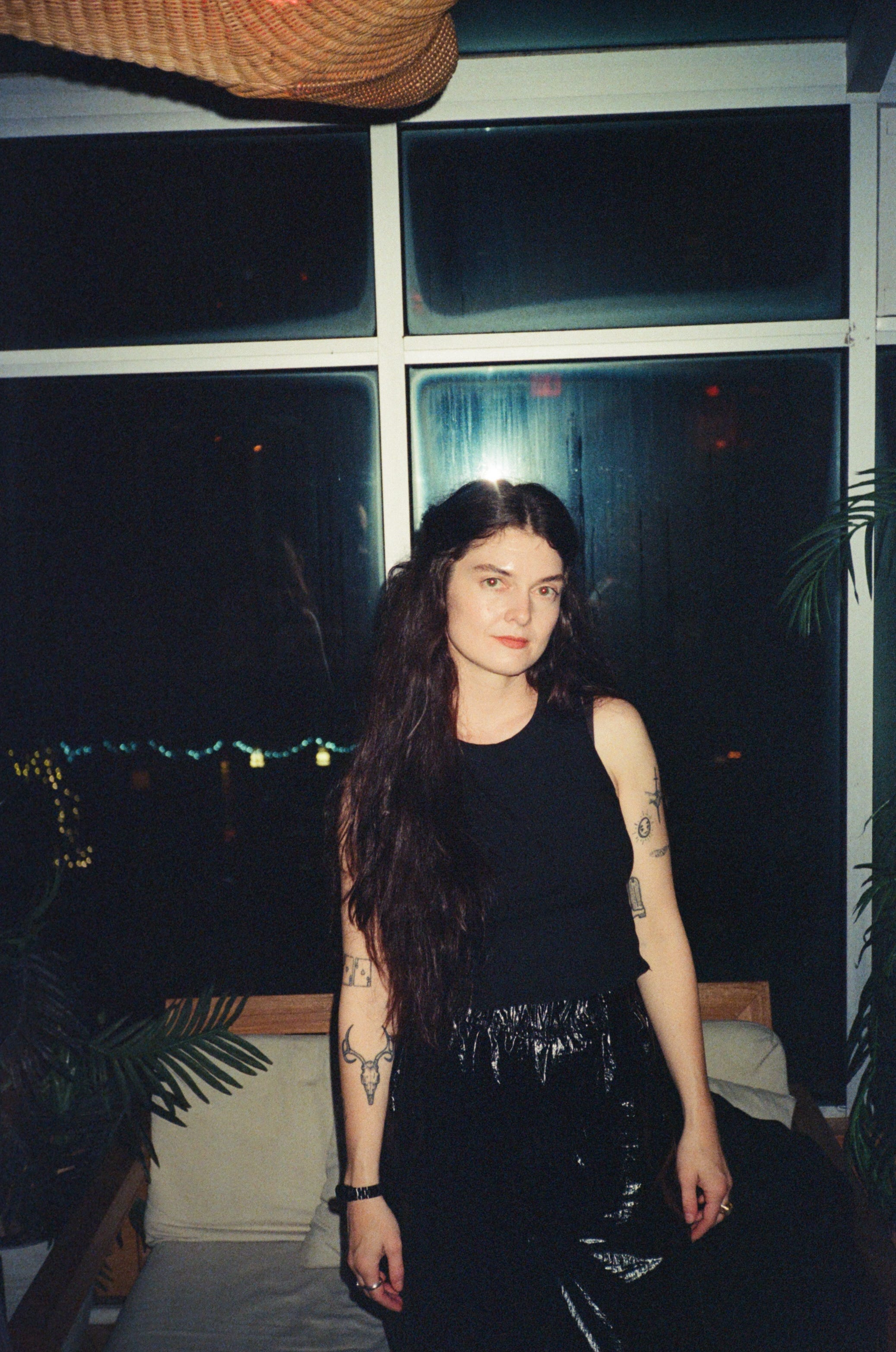
One thing I love about Substack is the cool people and newsletters you come across. I appreciate that you can find someone halfway across the country who gets just as excited about an old record or a good recipe as you do, and whose newsletter can become part of your weekly reading routine.
I first discovered Jacqui Devaney last year, through her Reading Life Interview with Petya K. Grady, and her newsletter, Dinner Music, has been one of my must-reads every week since.
Jacqui is a writer, selector, and DJ based in Austin, Texas. With her newsletter, every week, she shares a lineup of music that travels across genres, eras, and countries, paired with a meal, plus interviews and guest picks along the way. Reading the newsletter feels like being invited over by the friend with the best record collection, who actually knows how to set the vibe for the evening.
Through her newsletter, Jacqui reminds readers that taste isn’t just one thing, but a series of things, including the sounds, the meals, the books, the places, and people you come in contact with.
I’m always curious about how Jacqui approaches her pairings, so I’m excited to share a new interview with her about that very topic, along with how she sees the connection between food and music, what Austin has taught her ear, the books that changed the way she hears a song or album, and so much more.
Read on for the Q&A below, and be sure to subscribe to Jacqui’s newsletter here.
What’s your earliest memory as a music lover? Is there a song or album you remember loving early on?
It’s more of a composite image rather than an early memory, but I remember riding in the fold-down jumpseat in the back of my dad’s old, black Ford Ranger with the windows down and the radio up as we drove down back country roads to or from our house in Oatmeal, Texas. My dad was a rock-and-roll guy, so we listened to Queen, The Beatles, the B-52s, the Beach Boys, the Rolling Stones, all that music from the 60s and 70s. He’d play “Birthday” by the Beatles on my birthday, but my favorite Beatles song, and my very first favorite song, was “Rocky Raccoon.”
As a kid growing up in Texas, you’re surrounded by the mythology of outlaws and cowboys, and “Rocky Raccoon” plays on all of that. I mean, the honky-tonk piano? That’s an irresistible sound. While my dad listened to rock and roll, the rest of my family, on both sides, listened to a lot of classic country, so in a way, “Rocky Raccoon” represented a natural confluence of my early influences.
Also, one of my favorite movies was this little cartoon called Cats Don’t Dance, which has an incredible, extended musical scene:
What inspired you to start the newsletter, and how has that original idea changed, if at all, over 200 editions?
In 2022, I’d been back in Austin for a few years after spending over half of my 20s in New York, and I felt a little creatively adrift. I was applying to MFA programs, and my partner and I had just started DJing together (we still DJ together under the name Horse Opera), but I was also cooking and hosting a lot, so I was looking for a way to bring my interests together. At the time, I was working with the person who runs Flow State and ripped off his format for my own thing (which he was supportive of!!). I started by highlighting single albums at a time, a few times a week, and I moved into the weekly format of today after a year or so, both because I thought it worked better and to make it easier on myself, time-wise.
Early editions were a lot more open-ended, without any kind of unifying theme, more so just putting together songs for situations or for a particular feeling or vibe. Like, here’s some music for a romantic dinner or a raucous hangout, that kind of thing. Over time, I started going deeper into geography, genre, era, and artists. Especially as the newsletter grew, I thought it was important to highlight why the music mattered, where it came from, and how it was situated in history. I’ve written about music from Iran, queer folk and country music, live albums, women of yacht rock, and lots more. It’s been a great way for me to expand my own knowledge of music history.
A year or two ago, I started doing interviews and having some guests pick music, too. That’s been fun, because it injects more than just my own taste into the newsletter and is a great excuse to talk to people I admire, like Alex Amen and Catherine Lacey.
I want to start writing more essays, like one I published on the 4th of July about what it means to be an American. I come from journalism, so I have had a weird aversion to publishing lengthier or researched/reported work on my Substack. My mind is always like, why don’t you pitch it to a publication? As though my newsletter were less legitimate than legacy media. That’s something I’m working through!
One of my favorite things about your newsletter is that, as a music lover, I feel like I’m learning new music, and as a home chef, I feel like I am learning new things to cook or to snack on. How do you come up with the pairings, and what has been one of your favorite pairings recently?
So many of the pairings are based on what’s going on in my life at the time. Early on in the newsletter, I paired a ton of more elaborate recipes, because I was hosting more and spending more time on cooking. Nowadays, I’m DJing more and cooking less, so the recipes tend to be simpler. I also try to pair recipes with the theme, if it makes sense. If I’m talking about Arabic music, I’m going to link to some Arabic recipes, that kind of thing. That’s been a fun way to discover new foods to make, too. I also have a few close friends who are excellent cooks, and we are always sharing recipes.
Someday soon, I’m going to start doing “live” Dinner Music a few times a year, where I’m making more elaborate meals, getting more elaborate with the music, and producing some kind of physical media alongside it, like a zine or handwritten album cards.
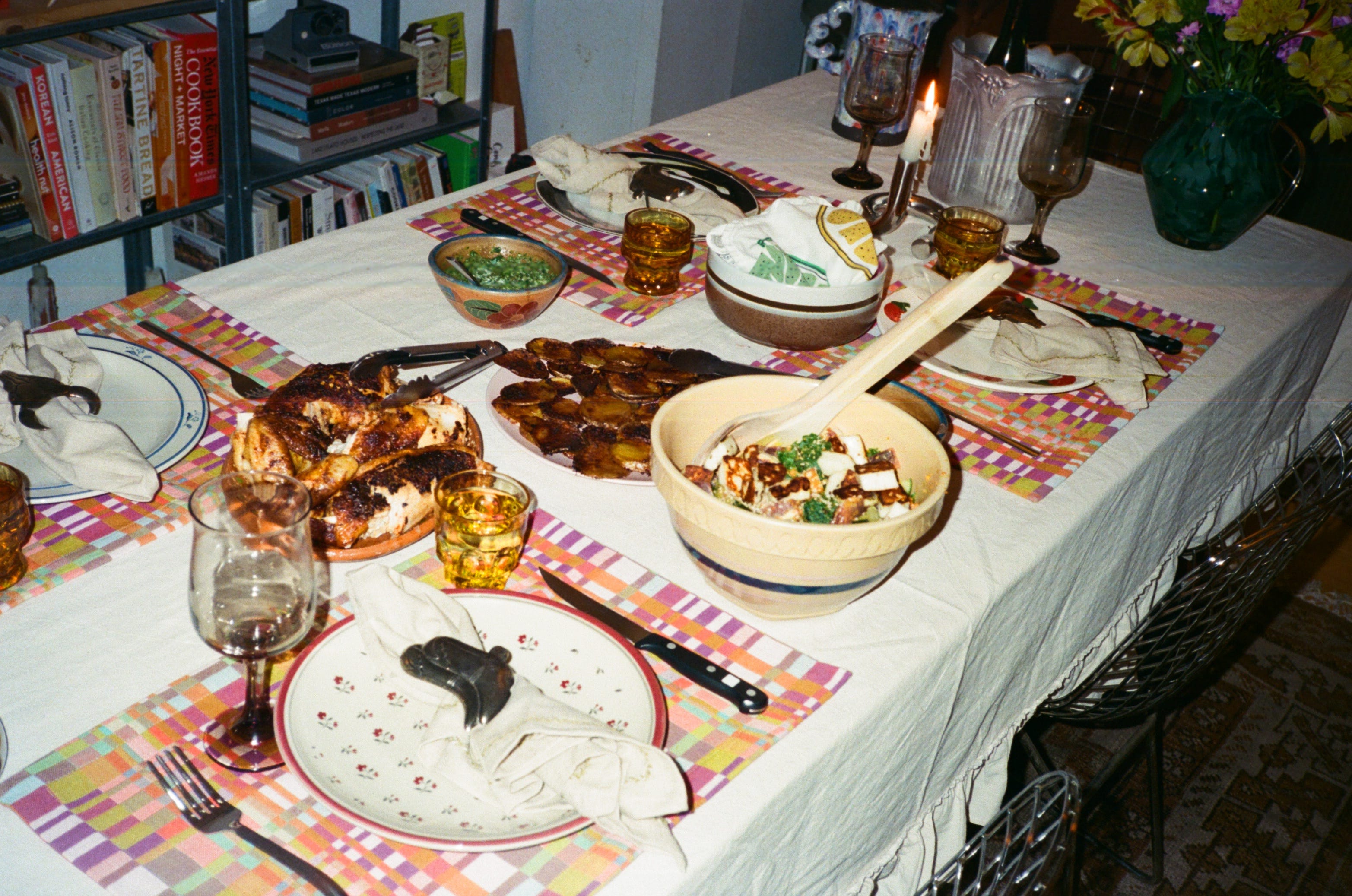
How do you see the connection between food and music, and how much does the setting around a song or album shape how you hear it?
I think it’s very connected! I know there’s a lot of great anthropological research on this topic throughout history – ceremonies connected to feasts or the practice of fasting, etc. I can’t talk too intelligently about that, but I do feel like there’s a cosmic feeling when food and music align in the right way. Perhaps it’s the way that the two can engage all of our senses at once and make us feel connected to some larger thing. That’s, of course, connected to setting. I don’t think I’d ever feel this way in most restaurants, though I think there are other good feelings that can come when those settings are right. But the best moments of my life have been sitting around a table with my people and eating great food with good music on. Those moments are everything to me. All of those sensory inputs weave into your body and create the fabric of your life.
I could write a lot about setting and music, too. I think the wrong music can ruin an experience quickly. No matter how good the food is, if the vibe is foul, it’ll make the food taste bad.
Your pairings move across genres, decades, and countries. What makes something feel like a Dinner Music discovery, and where do you dig to find it?
The million-dollar question! I think the simplest way to answer this is to ask myself, would I play this at dinner? That dinner could be just for me on the porch, or it could be for fifteen people or a hundred. Sometimes there are songs I would not play at any dinner, so they’re not Dinner Music songs. I still love a lot of those songs, too, but I’m not playing Melatonin by Tinashe at dinner, because if that song is playing, I’m shaking my ass! It’s all about taste and being thoughtful about taste. I’ve spent a lot of time over the years listening to music, thinking about music, noticing music, and all of that time spent deeply in it has shaped my feeling for it, which shapes how I curate.
As far as where I find music….I could almost frame the question in the opposite way. Where am I not finding music? I’m shazaming all the time, everywhere. I’m listening to people’s playlists. I’m listening to NTS, to YouTube. I’m reading Bandcamp Daily, I’m looking at record store websites, I’m on Discogs digging through genre labels. I’m spending time in record stores, too, and asking the employees what they’re listening to.
I’m lucky that people have started sending me music they’re excited about, too, because they know I’m excited about music 100% of the time. And I’m always 100% honest when I’ve never heard of something!! A friend recently sent me the playlists she made for her wedding, which were full of amazing Arabic music. I hadn’t heard any of it, which is hilarious, because she said the playlist was half-full of the Arabic equivalents of Mr. Brightside or Sweet Caroline. When you don’t have the context for another culture’s music, it’s so amazing and useful to have people who can tell you about it. I remember once I played the song “Palco,” which of course felt obscure to me, but the person was from South America and told me that basically every single person in Brazil knew the song. But that’s so exciting to me! Music is such a good way to try and get out of my western-centric brain!
After 200 editions, what do you think Dinner Music understands about music now that it didn’t when you started? Also, how has your taste changed since you started writing your newsletter? Have you learned anything about yourself as a listener?
I try to be a lot more intentional about talking about where music is coming from and the cultural context around it. Recently, I did a post where I talked about Fela Kuti, who was a total renegade in Nigeria, and went into some of the details about how the Nigerian military at the time came into his compound and threw his mother down the stairs (or out of a window), which killed her. They did this after Kuti was critical of Nigeria’s military dictatorship, fomenting discord during his shows and with his music. I wasn’t doing as much of that before, because I didn’t know how to fit everything in. Still, I have this feeling like I’m not doing enough to talk about the music, especially from non-Western cultures that I have very little context for. I decided it’s better to try than to avoid it because I’m afraid of not getting it right.
I think my taste has gotten a lot deeper. I can pinpoint really specific things that I love. I’ve been able to dig into genres I didn’t love and come out on the other side, with at least a new appreciation for it. As a listener, my taste is a lot more narrow, funnily enough. When I’m by myself, in the car or playing music while I’m cleaning or out on a walk, I’m listening to folk and country. It’s what drills deepest into my soul. I grew up in the Texas Hill Country, in the middle of the woods, so that music speaks to my earliest memories and my earliest self.
I think I’ve got a few different “selves,” and each has a different relationship to different genres of music. Sometimes I’m listening to booty-shaking pop music, sometimes I’m listening to Japanese city pop, sometimes I’m listening to funk, sometimes I’m deep into 2000s country music. I’ve learned to honor those selves. I don’t have to have a cohesive musical taste. I don’t care to.
Knowing that you are also a reader, has a book ever changed the way you heard a song or album, or has music ever sent you to a book?
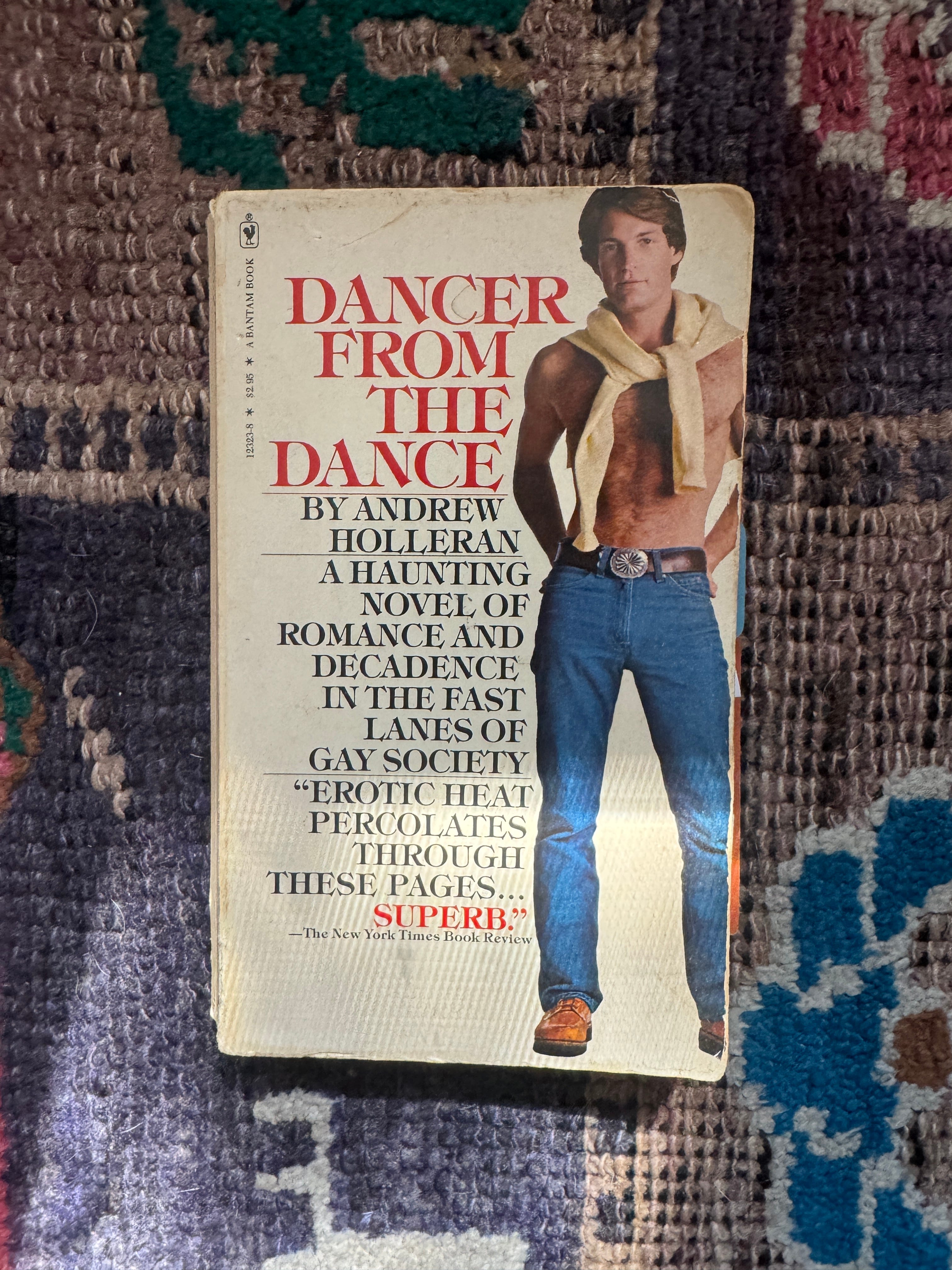
Definitely. Patti Smith immediately comes to mind. Her books have allowed me to feel her music more deeply. Also, Dancer From The Dance by Andrew Holleran has the best depictions of clubbing I’ve ever read. And that book references a ton of great disco tracks that I’ve gone back to. I have two copies—a paperback with a sexy cover and the newer edition with Garth Greenwell’s introduction.
Here’s a quote:
“There was a moment when their faces blossomed into the sweetest happiness, however—when everyone came together in a single lovely communion that was the reason they did what they did; and that occurred around six-thirty in the morning, when they took off their sweat-soaked T-shirts and screamed because Patty Jo had begun to sing: ‘Make me believe in you, show me that love can be true.’”
A few paragraphs later, he writes that they wring their sweat-soaked T-shirts into the gutter, which is one of the most amazing images of all time. That book has a lot about music, but honestly, the book itself is music. The writing is incredible. And it has such a long reverberation. I really felt that book in my core. It hit me, just like a song. When I listen to disco, I think of that book, which is bittersweet, because the book came about before the AIDS crisis was really out there, which makes it even more devastating, knowing everything that came after. It makes disco this really beautiful, complicated genre, full of hope and pain.
There are so many other great music and book combinations, too. I try to talk about books in my newsletter every week. I think taste is really a 360 thing. It needs inputs from everywhere. I just recently talked about Ben Shattuck’s The History of Sound, which is an incredible story and collection. Then there’s Catherine Lacey’s Biography of X, which does really interesting stuff with the history of Connie Converse. But there are also writers like Dave Hickey, Ian Penman, Lucy Sante, and Liz Pelly. Ryuichi Sakamoto’s book just came out, too. I haven’t read it yet, but I got it in the mail a few days ago.
I’d love to read a novel that does a good job talking about the emo music era. There are a few non-fiction books, like Such Great Heights or Where Are Your Boys Tonight. But is there a way to capture that time in a way that doesn’t feel twee or something? I’m not sure. I’d love to read that, though. How can Warped Tour become poetic?
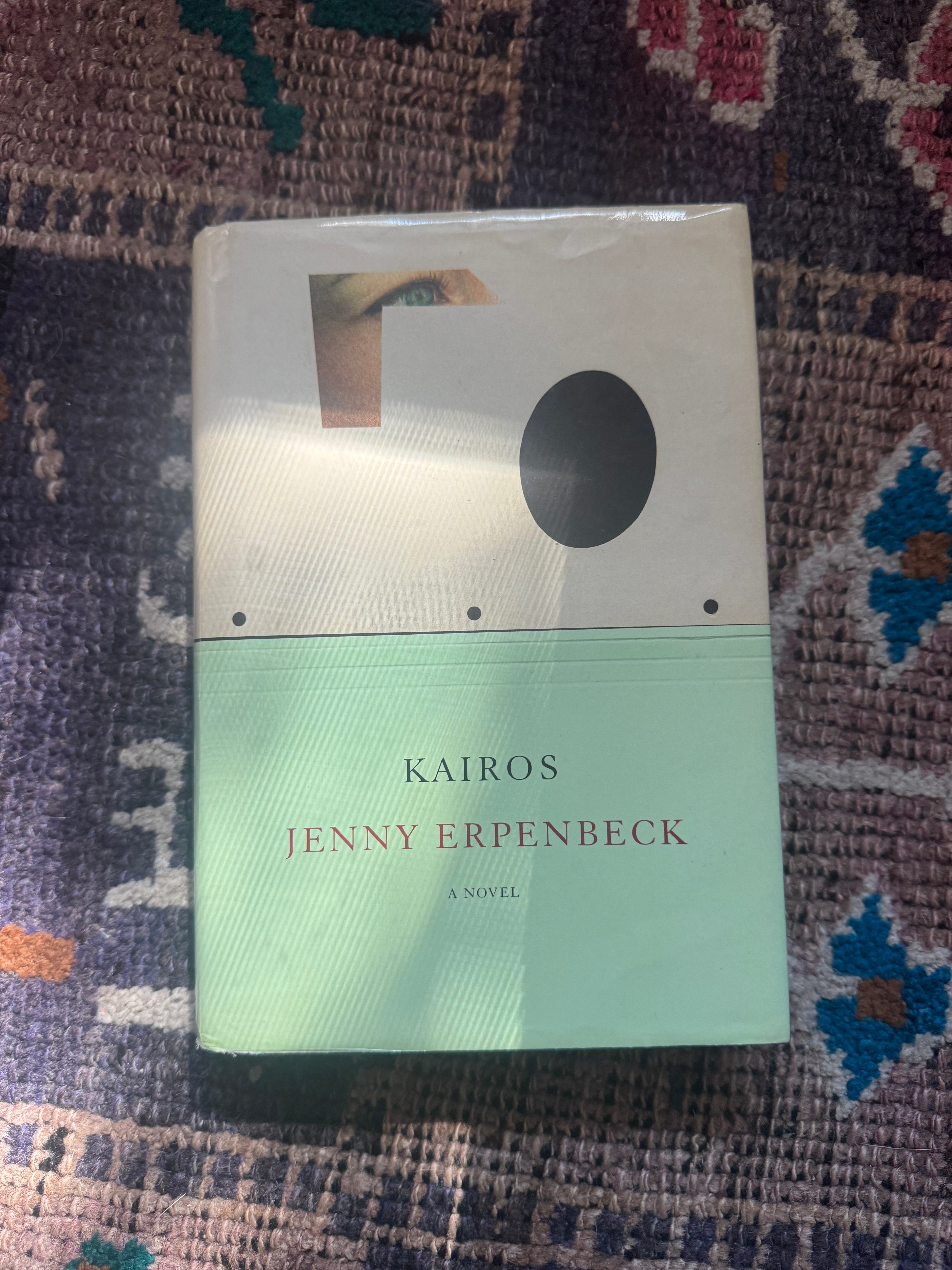
If you could create a soundtrack for a book you love, which book would it be and what’s the first song on the soundtrack?
The book: Kairos by Jenny Erpenbeck.
The song: “Falling in Love Again” by Nina Simone.
Describe your perfect evening with friends: the meal, the drink, and the album playing in the background.
We’re outside in the Hill Country at my friend’s mom’s ranch house that’s right on the Pedernales River, and we’ve grilled up some meat and vegetables. I’ve made some pasta, too. Lemon pasta. And there’s homemade focaccia. We’re drinking sparkling rosé, and we pop a new bottle right as we sit down to eat. It’s late, maybe 9 pm, and we’re listening to Alex Amen’s Sun of Amen, which mixes with undulations of the summer-night cicadas. We’re all deeply in love.
You’re based in Austin, which calls itself the Live Music Capital of the World. As a DJ and selector living there, how has the city shaped your ear, and how does all that live music show up in your newsletter?
When I moved back to Texas in 2019, I felt like I could allow myself to investigate my taste without feeling alienated. Everyone listens to country music here. I know that the rest of the US does now, too, but when I was in New York, country music was so uncool. I know everyone is line dancing now, but at the time, that was so not a thing. Cosplaying country wasn’t a thing then (in New York, that is—cosplaying country has always been a thing in Austin). So, it’s been nice to listen to Ella Langley and really feel like I’m hearing the music, because this is the kind of place where music like that is intended to be heard. If you listened to “Bottom Of Your Boots” in New York, it just wouldn’t make as much sense, though I’m sure you could still like it. Being back here has been an important lesson in accepting that underneath everything, I’m a country girl, through and through, and I have absolutely no choice in that.
Being in Austin, and in Central Texas, is great, because there is just so much access to live country music. Last weekend, we had a friend in town from Boston, and we went to Gruene for the day with my sister, who lives there, and got to catch a few minutes of an act playing at Gruene Hall.
That being said, Austin also has such a rich history in other genres, like funk, punk, and rock music. There are a lot of people here who care a lot about music, so access is never a problem. There’s incredible festivals year-round. Great DJs. Great record stores. I’m always looking to my environment for ideas for the newsletter, and that environment is Austin, so it’s tied into the newsletter, even when I’m not stating that directly. Austin and the Texas Hill Country is always there for me. That’s home.
That’s it for today; be sure to subscribe to Dinner Music here.