Love Deserves Its Soundtrack
Hi friends —
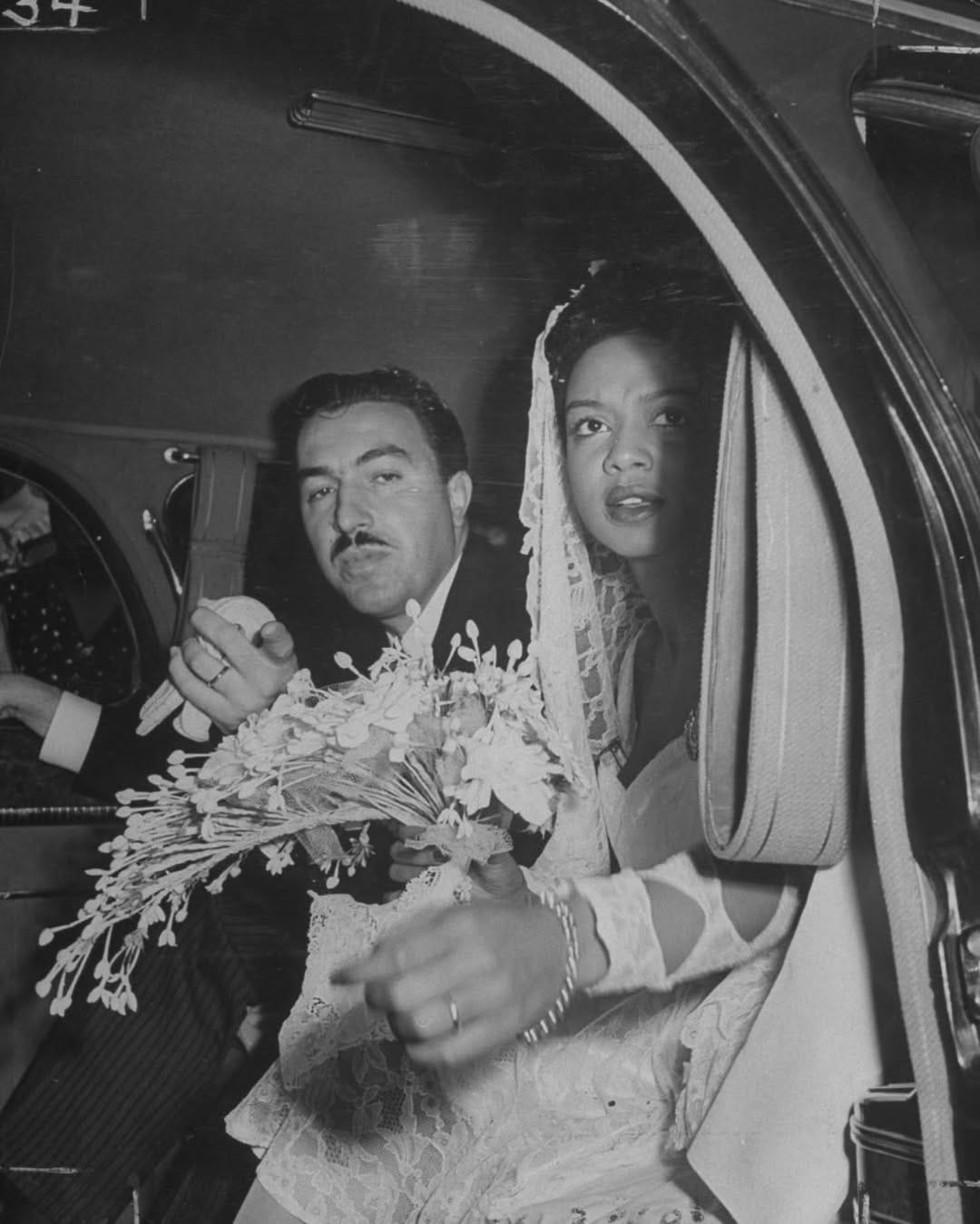
Last week, I finished reading With Love from Harlem by ReShonda Tate in under 24 hours because I could not put the book down.
The book follows acclaimed pianist Hazel Scott, once the most famous Black female entertainer in America. While it introduced me to Hazel and her friendships with other entertainers like Billie Holiday, Quincy Jones, and James Baldwin, it also introduced me to her love story with politician Adam Clayton Powell Jr., who became her husband. Tate shows the full scope of their relationship, from the beginning to the grand gestures to the demise. We also see Hazel with other men and witness Billie Holiday make poor decisions, all in the search for love.
Reading that book, coupled with it being Black History Month and Valentine’s Day coming up, I’ve had romance stuck on my mind. Specifically, the evolution of how Black people show up in romance novels, as well as the evolution in soul music. For me, there’s a natural parallel between the two because when I read romance books, I naturally score the scenes in my head, and also, both romance writing and music have evolved in tandem, tracking the same shifts in how we talk about love, desire, and connection.
So, I wanted to dive into that connection and explore some of the evolution that has happened throughout the years in both romance and music.
The Foundation (1960s-1980s)
Let’s start at the foundation. In the 1960s and ‘70s, love in both music and literature was viewed as transcendent, almost spiritual. This is the era of Marvin Gaye and Tammi Terrell duets, Al Green’s “Let’s Stay Together,” and Aretha Franklin’s “Day Dreaming.” Romance in classic soul was pure and poetic. Love could save you, redeem you, complete you. Think Roberta Flack’s “Feel Like Makin’ Love” or Stevie Wonder’s “As” from Songs in the Key of Life. Romance wasn’t just personal: it was communal. While Marvin and Al Green were making love feel transcendent on the radio, writers like James Baldwin, Toni Morrison, and Alice Walker were exploring love as survival, as struggle. These weren’t romance novels in the genre sense, but they established something crucial: Black love stories matter.
By the 1980s, the sensual, sophisticated Quiet Storm era arrived. Luther Vandross became the leader in romance for me. As a particular kid, I would watch one of his concert tour videos every time I went to my grandparents’ house, so when I think of romance, this is where my mind always goes. Think “A House Is Not a Home” or Anita Baker’s “Sweet Love.” Mature, grown, assured. This era was for the lovers who understood that love required intention and time.
While Luther and Anita were creating atmospheric romance on the airwaves, Black romance writers were fighting for space on the shelves. Pioneers like Brenda Jackson and Beverly Jenkins were building the foundation for Black romance as a genre. Jackson became the first Black woman to achieve both New York Times and USA Today bestseller status in romance with her 1995 debut, Tonight & Forever. Music had more access. Literature was fighting harder. But both were creating the same atmospheric, intentional romance.
The Shift (1990s-2000s)
By the mid-90s, R&B shifted, making way for yearning and explicitness. There was a return of yearning mixed with cheating, being okay with being the other woman, desire without commitment. I think of songs like “Your My Little Secret” by Xscape or Carl Thomas’ “I Wish,” which asked a key, not shit question, “She chose to stay at home / So they could be a family, for the children / But what about me?”
You also had the pleading of Boyz II Men, which had an earnest quality. This era gave me three of my favorite albums: Brandy’s self-titled debut, Toni Braxton’s Secrets, and Mary J. Blige’s Share My World. These albums gave me the language to talk about romance, love, and longing. This shift taught us that romance could be messy, sometimes toxic. Love could hurt you as much as heal you.
On the literary side, this era was defined for me by Terry McMillan. Waiting to Exhale became a cultural phenomenon, centering Black women’s friendships and romantic lives. The book and movie showed that romance and love don’t just live in romantic relationships; they also live in friendships, and that’s equally as important. Then came How Stella Got Her Groove Back, showing us that Black women could claim desire and joy at any age. She was doing in literature what Brandy and Toni Braxton were doing in music: centering Black women’s perspectives on love, desire, and disappointment.
By the 2000s, romance got honest. Messy. Sexual. Therapy-worthy. And that honesty felt like freedom. Neo-soul arrived and changed everything.
Jill Scott’s Who Is Jill Scott? gave us “A Long Walk” and “He Loves Me.” Erykah Badu’s Mama’s Gun told us to unpack our emotional baggage with “Bag Lady.” D’Angelo’s Voodoo was raw, intimate, vulnerable. These artists weren’t afraid to talk about therapy, healing, the work required to love well. But mainstream R&B was also getting explicit. Usher’s Confessions was a cultural moment: here was a man confessing to cheating, to messy love, and we couldn’t stop listening. Romance was becoming multidimensional. The contradictions were the point.
While neo-soul was finding its way, Black romance literature was also getting honest and sexy. I feel like most Black female millennials had a Zane era. I remember reading Addicted, Afterburn, and Chocolate Flava, clutching my little pearls. Zane brought Black erotica into mainstream publishing, writing about Black women’s sexual desire without shame. Eric Jerome Dickey was giving us messy, complicated relationships in books like Cheaters and Friends and Lovers. Both music and literature were saying: Black love is not a monolith. It can be spiritual AND sexual. Healing AND hurtful.
Where the sit today
Now, we’re here today. Authors and musicians no longer have to fight for space. They took it and are building it on their own terms. I keep coming back to King’s We Are King. There’s something about that album: the lushness of Quiet Storm, the vulnerability of neo-soul, but thoroughly modern. Songs like “The Greatest” and “Supernatural” are patient, ethereal, confident. Corinne Bailey Rae, Lianne La Havas, SZA, Summer Walker, Olivia Dean, H.E.R., Ari Lennox, Victoria Monét, Cleo Sol, Giveon are all creating music that feels both vintage-inspired and entirely of this moment.
Romance now contains multitudes.
It can be joyful and anxious.
It can be vintage and futurist.
It can be healing, and still heartbreaking.
Traditional publishing has caught up. Kennedy Ryan has become one of the biggest names in contemporary romance. Her characters aren’t just falling in love. They’re healing, doing the work, being self-aware. Tia Williams gave us Seven Days in June, a love story as much about trauma and healing as second chances.
Then there’s my mom’s favorite, Jasmine Guillory, who recently talked about how when she was working on The Wedding Date, traditional publishing wasn’t embracing romances by and about people of color. The audience for Black romance has grown exponentially since then.
The gatekeepers opened the gates, but Black romance writers weren’t waiting for permission. Christina C. Jones, Adriana Herrera, Kristina Forest are all thriving, telling different kinds of Black love stories. Contemporary Black romance gives us both healing and mess, joy and complexity. Black romance in 2026 doesn’t have to prove itself anymore. The work of Brenda Jackson and Beverly Jenkins in the 90s, the boldness of Zane and Eric Jerome Dickey in the 2000s, the cultural moments Terry McMillan created all built the foundation. Now we get to build the house however we want.
Those are just a few of my thoughts, curious what you think. Let me know in the comments, or send me a note. In the meantime, listen to my lover girl playlist on Spotify with 97 songs on love.
Also, before you go, listen to this interview which touches on the music topic as well:
And with that, I’ll catch you on Tuesday.


"Romance now contains multitudes.
It can be joyful and anxious.
It can be vintage and futurist.
It can be healing, and still heartbreaking."
love this so muchhh!! the picture of Hazel Scott and Adam Clayton Powell Jr. is absolutely dreamy. and that lovergirl playlist hits everytimeeeee 👏🏾👏🏾👏🏾